
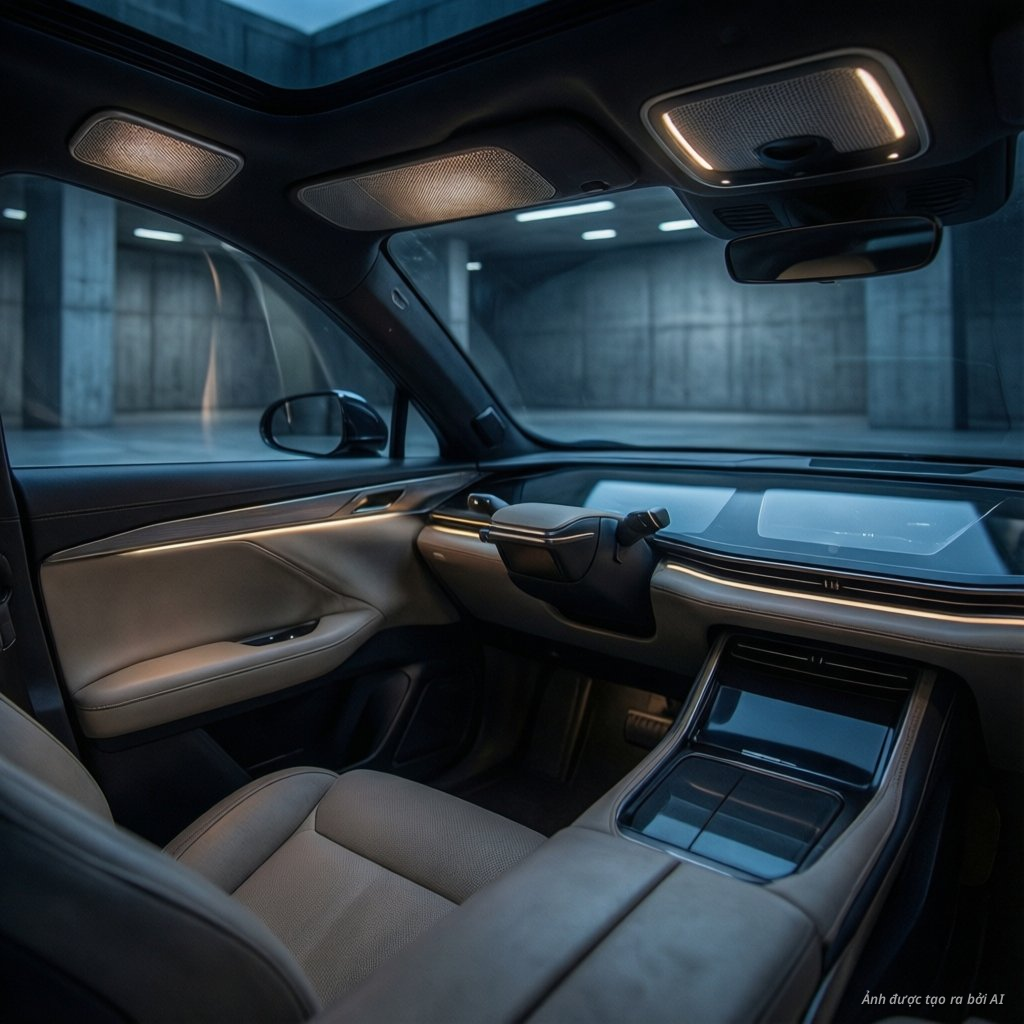
The automotive industry is undergoing a profound acoustic transformation. For decades, drivers settled for simple stereo setups that lacked depth and spatial accuracy. Today, the rise of 3D surround sound is turning vehicle cabins into high-fidelity concert halls.
This technology moves beyond traditional horizontal soundscapes. It introduces a vertical dimension that wraps passengers in a sphere of audio. By utilizing advanced digital signal processing, manufacturers create an immersive environment that was once impossible inside a moving car.[1]
Understanding the shift to spatial audio
Traditional audio systems rely on channel-based mixing. They send specific signals to fixed speaker locations. In contrast, modern 3D systems use object-based audio. This allows sound engineers to place individual elements anywhere in a three-dimensional space.[2]
Technologies like Dolby Atmos for automotive allow artists to render up to 128 audio tracks simultaneously. As a result, the music feels less like it is coming from speakers and more like it is happening around you. This spatial precision is the hallmark of a premium 3D listening experience.
The role of hardware in 3D sound
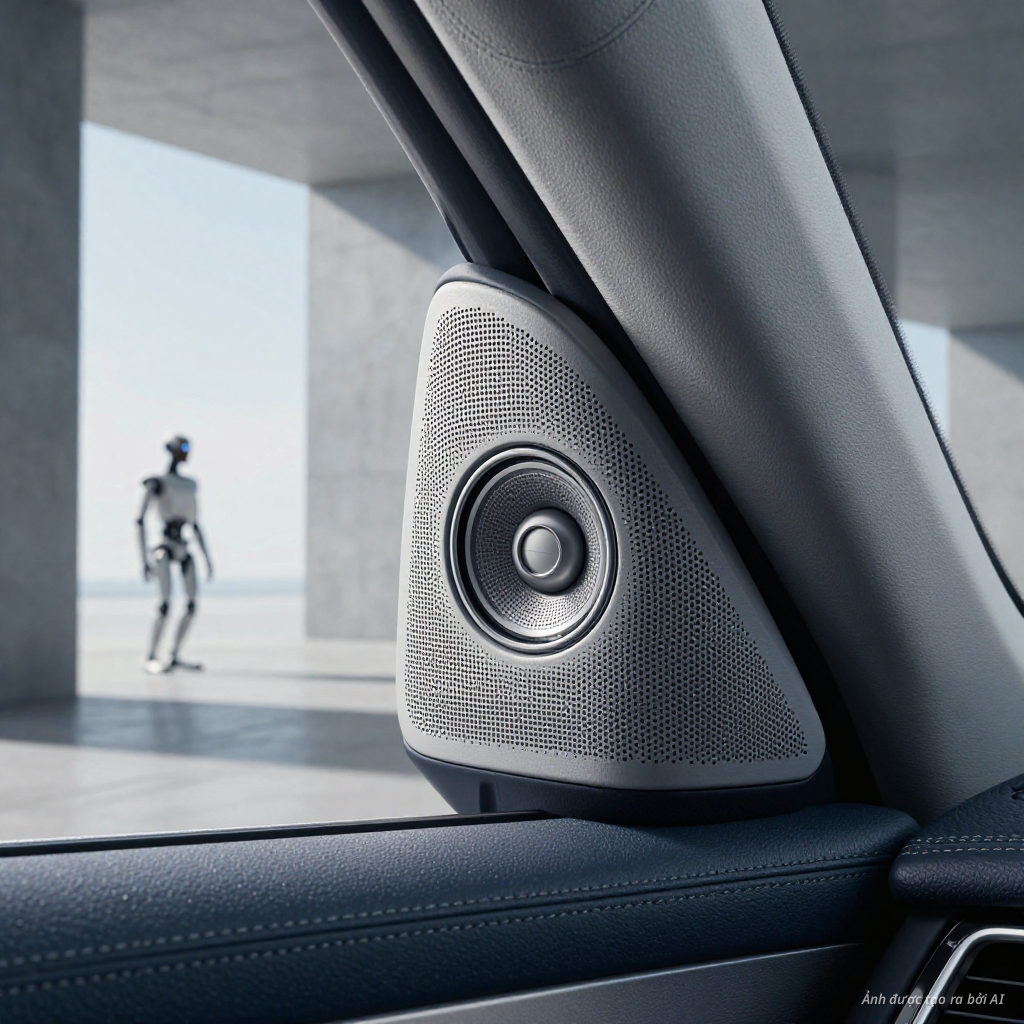
Achieving a true 3D soundscape requires more than just software. It demands a sophisticated hardware architecture. Modern vehicles now feature between 14 and 36 speakers to handle the complexity of spatial audio.[3]
Key hardware components include:
- Height speakers: Mounted in the headliner to project sound downward.
- Headrest speakers: Near-field units that provide localized audio for each passenger.
- Tactile transducers: Embedded in seats to allow passengers to feel low-frequency vibrations.
These components work together to provide what many call “4D audio.” By adding physical vibration to the acoustic experience, the system engages more senses. You can explore how Burmester integrates these resonators into high-end German sedans to enhance the listener’s connection to the music.
Why electric vehicles are the perfect stage
The transition to electric vehicles (EVs) has accelerated the adoption of 3D audio. EVs produce significantly lower noise, vibration, and harshness (NVH) levels than traditional internal combustion engines.[4]
A quiet cabin provides a clean slate for high-resolution audio. With fewer background distractions, listeners can appreciate the subtle nuances of spatial sound. This environment allows for a wider dynamic range, ensuring that even the softest notes remain crisp and clear. You can learn more about how over-the-air software updates allow manufacturers to refine these acoustic profiles long after the vehicle leaves the factory.
Advanced algorithms and sound optimization
A vehicle cabin is an acoustically challenging environment. Glass, leather, and plastic surfaces create reflections that can muddy the sound. To solve this, companies like Dirac use complex algorithms to correct cabin imperfections.[2]
These algorithms manage phase alignment and cabin resonance in real-time. They ensure that every passenger enjoys a balanced soundstage regardless of their seating position. This is a significant leap from older systems that were tuned primarily for the driver’s seat.
Individual sound zones
Another breakthrough in 3D audio is the creation of individual sound zones. Spatial processing allows the system to isolate audio for specific passengers. One person can listen to a podcast while another enjoys a 3D music mix.[5]
This level of control is achieved through advanced beamforming and near-field speakers. It transforms the vehicle into a multi-purpose entertainment hub. As HARMAN continues to innovate in this space, the line between home theater and in-car audio continues to blur.
The future of the listening experience
The future of in-car audio is highly personalized and immersive. As software-defined vehicles become the industry standard, we expect to see even more integration with streaming services. Native support for high-resolution spatial audio platforms will become a standard expectation for audiophiles.
We are also seeing a shift toward more sustainable, lightweight speaker materials that maintain high fidelity. This ensures that the pursuit of better sound does not come at the expense of vehicle efficiency. For those interested in the broader technological landscape, the rise of AI virtual assistants will likely play a role in how we interact with these complex audio systems in the coming years.
More Information
- Dolby Atmos: An object-based audio format that allows sound to be placed in a 3D space, providing a height dimension that standard surround sound systems lack.
- Dirac Virtuo: A sound optimization technology that uses advanced algorithms to correct acoustic imperfections in a vehicle cabin, creating a wider and more immersive soundstage for all passengers.
- NVH (Noise, Vibration, and Harshness): A term used in automotive engineering to describe the quality and comfort of a vehicle’s interior environment, which directly impacts the clarity of audio systems.
- Sennheiser AMBEO Mobility: A specialized audio rendering suite that converts standard stereo or surround streams into a 3D spatial experience, enhancing the depth and clarity of in-car audio.
- HARMAN QuantumLogic 3D: A signal processing technology that extracts audio elements from standard sources and redistributes them into a 3D soundfield, creating a more realistic listening environment.