

Modern engineering demands unprecedented precision in motion control. As industries shift toward electrification, the reliance on advanced software to manage electric motors has grown exponentially. Engineers now prioritize efficiency, thermal management, and dynamic response as core design pillars.
Optimizing electric motors requires a departure from traditional scalar control. By implementing sophisticated algorithms, developers can significantly reduce energy consumption. This approach is vital for sectors ranging from automotive manufacturing to industrial robotics.
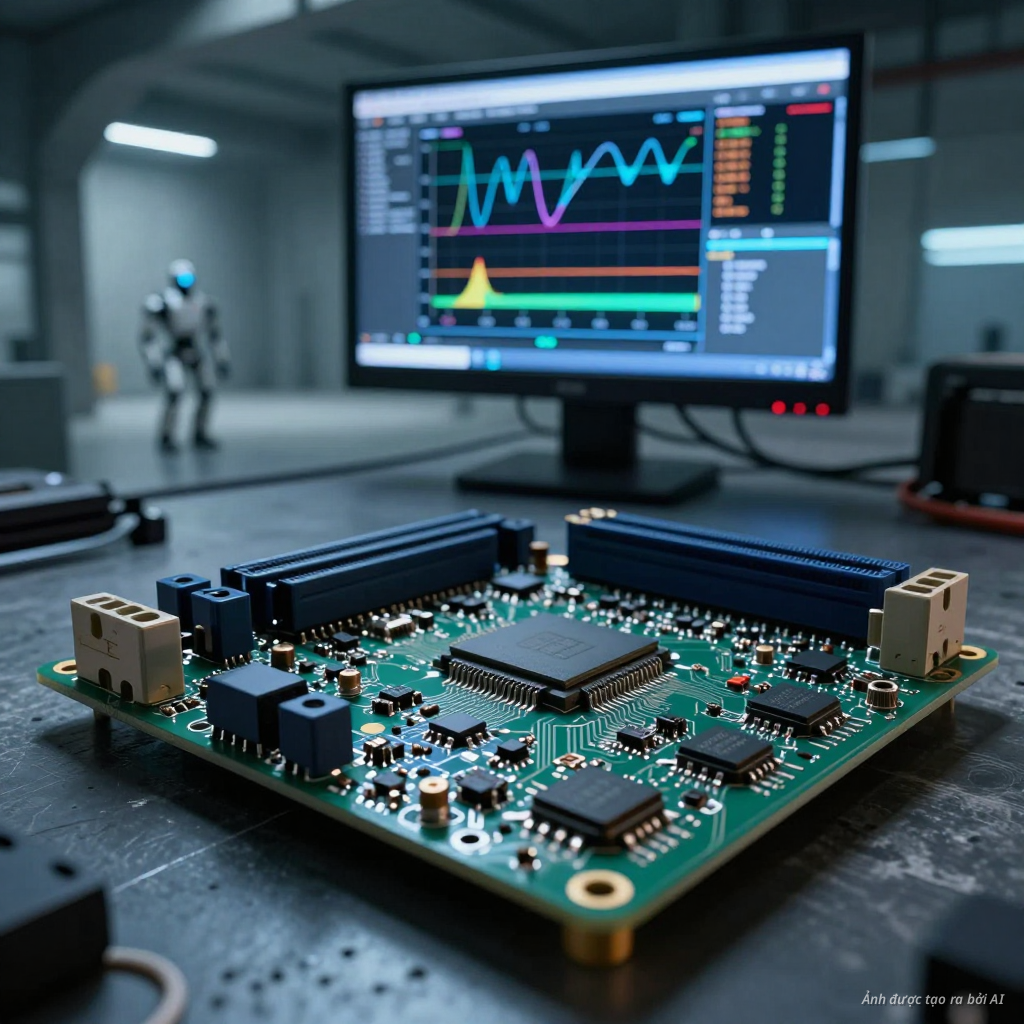
The shift toward advanced control algorithms
Traditional V/f control often fails to meet the demands of high-performance applications. Today, engineers utilize field-oriented control (FOC) to decouple magnetic flux and torque. This method allows for precise, independent adjustment of stator current components, leading to superior efficiency [1].
Vector control provides smooth operation across the entire speed range. It minimizes harmonic distortion, which is a common drawback of open-loop scalar systems. By adopting Texas Instruments C2000 MotorControl SDK, teams can accelerate the deployment of these robust control strategies.
Direct torque control and dynamic response
Direct torque control (DTC) represents a significant leap in drive technology. Popularized by industry leaders, this method controls torque and flux without complex coordinate transformations [3]. It delivers rapid dynamic responses even under fluctuating load conditions.
This technology is essential for applications requiring high reliability. By utilizing ABB’s DTC firmware, operators can maintain optimal energy output. The software dynamically adjusts motor flux based on real-time demand, ensuring minimal power waste during light-load cycles.
Maximizing efficiency with MTPA strategies
For permanent magnet synchronous motors (PMSM), efficiency is often defined by the maximum torque per ampere (MTPA) strategy. This algorithm calculates the precise current vector angle needed for output. By minimizing stator current, it effectively reduces copper losses [5].
Modern software suites like the STMicroelectronics X-CUBE-MCSDK integrate these optimizations natively. Engineers can leverage these libraries to implement field weakening and position observer models with ease. This reduces the need for physical sensors, thereby lowering system weight and complexity.
Sensorless control and mathematical modeling
Physical position sensors like encoders often become points of failure in harsh environments. Sensorless control replaces these components with advanced mathematical models. Algorithms such as extended Kalman filters or sliding mode observers estimate velocity and position internally [2].
This transition is critical for understanding over-the-air software updates for modern vehicles. By relying on software-based observers, manufacturers can improve system durability. These models are now standard in high-end automotive and aerospace designs.
Model-based design for rapid development
The complexity of modern motor control requires rigorous simulation before hardware implementation. Tools like the MathWorks Motor Control Blockset allow engineers to design and test algorithms in a virtual environment. This process facilitates the auto-generation of C code for embedded microcontrollers [2].
Simulation ensures that control strategies like field weakening perform correctly under extreme conditions. It also helps in the future of automotive manufacturing: VinFast’s automated processes in Southeast Asia, where precision is paramount. By validating designs early, companies reduce time-to-market and development costs.
Industry trends and regulatory impact
Global energy regulations are driving the adoption of high-efficiency drive software. Standards like IE3, IE4, and IE5 mandate significant energy savings in industrial environments. Software-driven variable frequency drives (VFDs) are the primary tools for achieving these targets [4].
Predictive maintenance is another major trend. Modern drive software streams diagnostic data to cloud platforms to detect winding failures early. This proactive approach minimizes downtime and extends the mechanical lifespan of the entire system.
Conclusion
Optimizing electric motor performance is no longer just about hardware. The intelligence lies in the software algorithms that manage flux, torque, and current. By leveraging FOC, DTC, and MTPA strategies, engineers can achieve peak efficiency in any application.
Investing in robust software development kits and simulation tools is essential for staying competitive. As motor technology evolves toward synchronous reluctance and rare-earth-free designs, software will remain the most critical component of the system. Engineers who master these tools will lead the next wave of industrial and automotive innovation.
More Information
- Field-oriented control (FOC): A control technique that decouples the magnetic flux and torque of a motor, allowing for independent, high-precision control of current components for improved efficiency and performance.
- Sensorless control: A method of estimating motor position and velocity using mathematical algorithms rather than physical sensors, which reduces hardware costs, wiring complexity, and potential failure points in the drive system.
- Direct torque control (DTC): A high-performance control strategy that manages motor torque and flux directly, providing rapid dynamic response and energy optimization without requiring complex coordinate transformations.
- Field weakening: A software-driven technique used to extend an electric motor’s operating speed beyond its base limit by reducing the magnetic flux when the motor reaches its nominal voltage threshold.
- Maximum torque per ampere (MTPA): An algorithmic strategy for PMSM motors that determines the optimal current vector angle to produce maximum output torque while minimizing copper losses.