
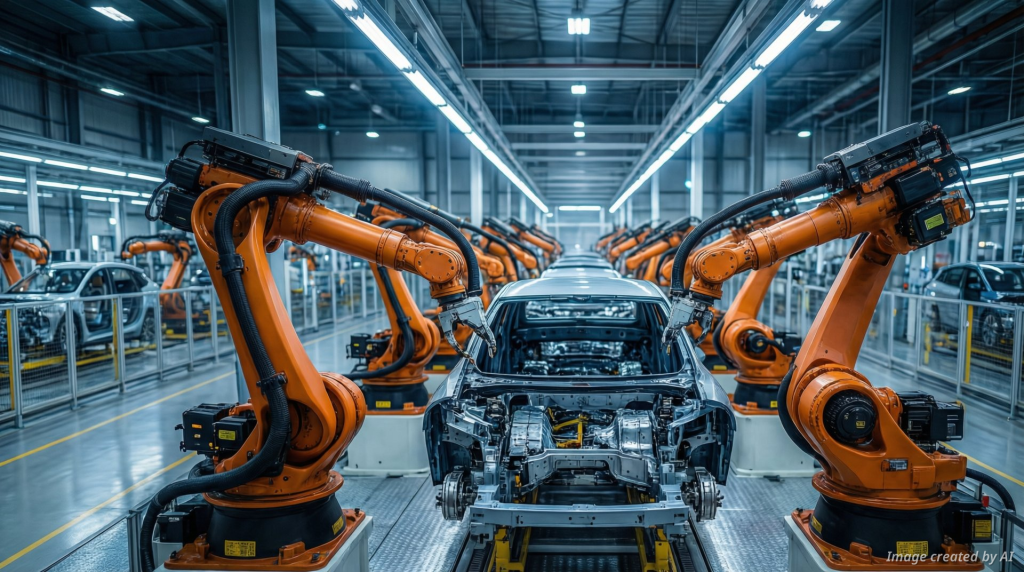
The global automotive industry is undergoing a massive transformation. Automation and smart manufacturing are at the heart of this shift. In Southeast Asia, VinFast has emerged as a leader in this high-tech revolution. The company has built one of the most advanced production facilities in the region [1].
VinFast’s manufacturing complex in Hai Phong, Vietnam, serves as a blueprint for modern efficiency. By integrating thousands of robots, the company has streamlined its production cycle significantly. This approach ensures precision, speed, and consistent quality across all vehicle lines [2].
The role of smart automation in vehicle assembly
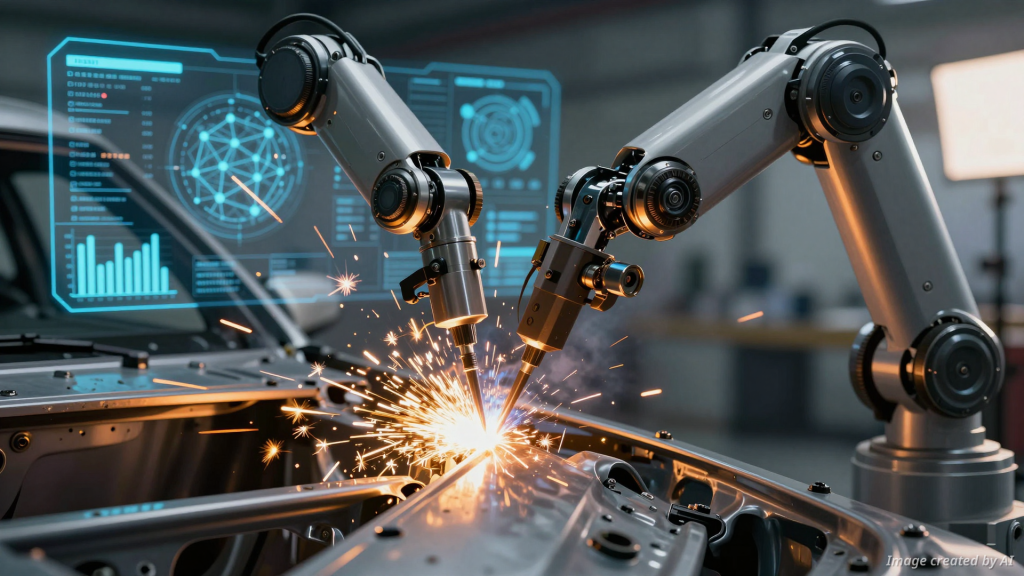
Automation is not just about replacing manual labor. It is about enhancing safety and accuracy in complex tasks. VinFast utilizes sophisticated robotics for welding, painting, and general assembly [3]. These machines operate with sub-millimeter precision, which is impossible to achieve by hand alone.
The facility employs a high level of connectivity through the Industrial Internet of Things (IIoT). This allows managers to monitor every stage of production in real-time. If a bottleneck occurs, the system identifies it instantly. This data-driven strategy minimizes downtime and maximizes output capacity [4].
Precision welding and structural integrity
The body shop is perhaps the most impressive section of the VinFast factory. Here, hundreds of robots work in perfect harmony to assemble the vehicle frame. These robots use advanced sensors to ensure every weld is perfect. This structural integrity is vital for the safety of the final product.
By automating the welding process, VinFast maintains a high standard of durability. The consistency provided by these machines ensures that every car leaving the factory meets global safety benchmarks. This level of automation is a key differentiator for the brand in the competitive Southeast Asian market [5].
Advanced painting and finishing technologies
Painting a vehicle requires a controlled environment to prevent defects. VinFast uses fully automated paint shops that operate in dust-free zones. Robotic sprayers apply paint with exact thickness and uniformity. This reduces waste and ensures a flawless finish on every vehicle body.
The automation extends to the quality control phase as well. High-resolution cameras and sensors inspect the paint job for any imperfections. If a flaw is detected, the system flags it for review. This rigorous process guarantees that each car meets the aesthetic expectations of modern consumers.
Sustainability through efficient manufacturing
Automation also plays a crucial role in the company’s sustainability goals. Efficient machines consume less energy than traditional manual tools. Furthermore, precise robotic application reduces the amount of paint and materials used during production. This helps lower the overall carbon footprint of the manufacturing process.
VinFast continues to invest in green technology to optimize its energy consumption. By integrating renewable energy sources into the factory grid, the company aims to lead the transition to eco-friendly manufacturing. This commitment reflects a broader vision for the future of the automotive industry in Southeast Asia.
The impact on the Southeast Asian automotive market
VinFast’s success has set a new benchmark for the region. Other manufacturers are now looking to adopt similar automated processes to remain competitive. This shift is driving innovation across the entire supply chain in Southeast Asia. It is also creating a demand for a highly skilled workforce capable of managing these advanced systems.
The company is not just building cars; it is building an ecosystem. By fostering partnerships with global technology leaders, VinFast ensures its processes remain at the cutting edge. This collaborative approach is essential for maintaining a competitive advantage in a rapidly evolving global market.
Future outlook for automated production
Looking ahead, VinFast plans to further integrate artificial intelligence into its production lines. AI will enable predictive maintenance, allowing the factory to fix issues before they even occur. This proactive approach will further boost efficiency and reduce operational costs.
The journey toward full factory automation is ongoing. As technology advances, VinFast remains committed to adopting the latest innovations. This dedication ensures the company will continue to play a pivotal role in the global automotive landscape for years to come.
More Information
- Automation: The use of technology and control systems to operate equipment with minimal human intervention, aimed at increasing efficiency, safety, and consistency in industrial manufacturing environments.
- IIoT (Industrial Internet of Things): A network of interconnected sensors, instruments, and devices that collect and share data to optimize manufacturing processes and improve operational performance through real-time analytics.
- Robotic welding: A specialized manufacturing process where programmable robotic arms perform welding tasks, ensuring high-speed production and superior structural consistency compared to manual welding methods.
- Predictive maintenance: A proactive strategy that uses data analysis and sensor technology to monitor equipment health and predict potential failures, allowing for repairs before downtime occurs.
- Smart factory: A highly digitized manufacturing facility that continuously collects and shares data across connected machines and systems to improve overall production quality and resource management.