
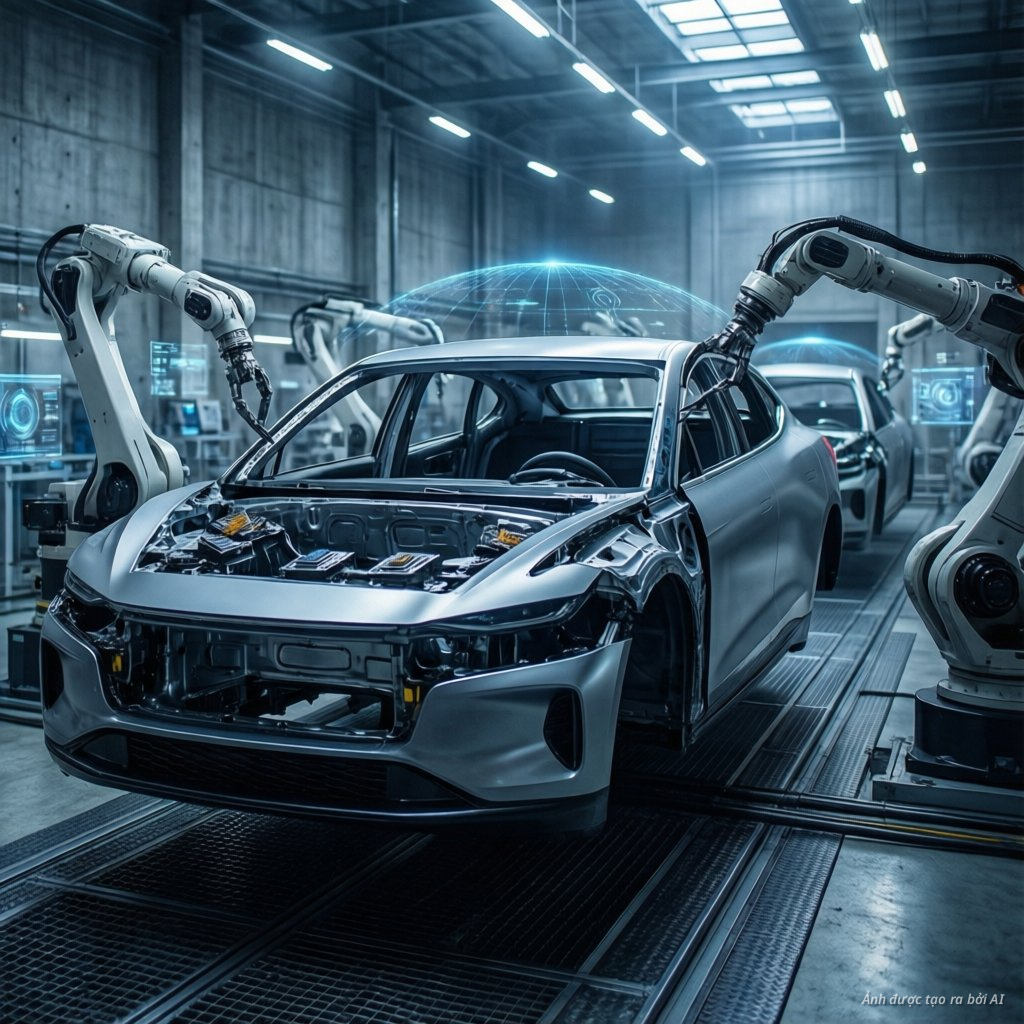
The automotive industry is currently undergoing a massive transformation driven by the integration of advanced driver assistance systems, commonly known as ADAS. These technologies are designed to monitor the vehicle’s surroundings continuously, predict potential collisions, and proactively intervene before an accident occurs [1]. Unlike passive safety features such as airbags or seatbelts, which mitigate injury during an impact, active safety systems aim to prevent the collision entirely.
For automotive component manufacturers, understanding this shift is critical for future competitiveness. The global market for these systems relies heavily on a multi-sensor architecture that combines high-performance edge computing with stringent safety standards [4]. As vehicles evolve into software-defined platforms, the demand for precise, reliable, and integrated sensor hardware continues to grow.
Key sensor technologies in automotive active safety
Active safety relies on four primary hardware categories. Each sensor type operates on distinct physical principles to provide complementary data, ensuring the vehicle maintains a complete understanding of its environment.
- Cameras: These provide high-resolution visual context, enabling lane detection and traffic sign recognition [3]. However, their performance can degrade in heavy rain, fog, or direct glare.
- Radar: Operating in the 76–81 GHz range, radar measures speed and distance with high precision. It functions reliably in adverse weather, though it struggles with fine object classification.
- LiDAR: This technology generates precise 3D point clouds for high-definition spatial perception. It is essential for level 3 and higher autonomy, despite its higher hardware costs.
- Ultrasonic sensors: These are inexpensive and highly accurate for short-range maneuvering, such as automated parking systems.
Manufacturers must balance these technologies to create a robust safety ecosystem that operates effectively in all driving conditions.
Sensor fusion and centralized compute architecture
No single sensor modality is sufficient for modern safety requirements. Instead, engineers use sensor fusion to combine raw data from cameras, radar, and LiDAR into a unified 360-degree environment model. This process requires significant computational power.
The industry is transitioning from decentralized electronic control units to centralized domain control units. These units run dedicated artificial intelligence chips that process vast amounts of data in real time [4]. This centralized approach enables software-defined vehicles to receive over-the-air updates, allowing manufacturers to refine detection algorithms long after the vehicle leaves the assembly line.
Core active safety applications
The integration of these sensors powers several critical safety features that are now becoming industry standard. Automatic emergency braking is perhaps the most significant, using radar and cameras to monitor distances and apply brakes if the driver fails to react to a collision threat [3]. This technology is expanding to include pedestrian, cyclist, and intersection-turning detection.
Other vital applications include adaptive cruise control and traffic jam assist, which manage vehicle speed and distance in heavy traffic. Lane keeping and centering technologies further enhance safety by applying steering torque to prevent unintended lane departures. Additionally, driver monitoring systems are becoming mandatory in many regions to detect drowsiness or distraction through near-infrared cameras [3].
Understanding driving automation levels
Automotive active safety aligns directly with the SAE J3016 standard for driving automation [2]. Levels 0 through 2 represent driver support features, where the system assists but the human remains responsible. Level 3 introduces conditional automation, requiring significant sensor redundancy to ensure safety when the system takes control [2].
As manufacturers push toward levels 4 and 5, the complexity of these systems increases exponentially. The focus shifts from merely assisting the driver to creating fully autonomous operational domains. This evolution requires constant innovation in smart vehicle management and high-speed data processing.
Global regulatory drivers and testing
Regulatory bodies are significantly accelerating the adoption of active safety technologies. The European New Car Assessment Programme consistently elevates safety weightings, forcing manufacturers to prioritize advanced sensor integration to achieve high ratings [3]. Similarly, the United States National Highway Traffic Safety Administration has finalized rules mandating automatic emergency braking on nearly all new passenger vehicles by 2029 [1].
These international protocols ensure a baseline of safety for all road users. Manufacturers who invest in these technologies early gain a distinct advantage in the global automotive market [4]. Compliance with these standards is no longer optional; it is a fundamental requirement for market entry.
Emerging technical trends
The future of active safety lies in several emerging technologies that promise to bridge current performance gaps. 4D imaging radar is one such advancement, adding elevation resolution to traditional radar systems to provide a more detailed spatial map [4]. Furthermore, solid-state LiDAR is reducing the cost and size of 3D sensing components, making them easier to integrate into vehicle designs.
Thermal cameras are also gaining traction, as they allow systems to detect living targets in complete darkness or severe weather conditions. Finally, vehicle-to-everything communication is beginning to supplement onboard sensors by providing data from infrastructure and other vehicles. These trends indicate a move toward a more interconnected and proactive safety landscape.
More Information
- Automatic emergency braking (AEB): A safety system that uses sensors to detect potential collisions and automatically applies the brakes to prevent or mitigate the impact [1].
- SAE J3016: The global industry standard that defines the six levels of driving automation, ranging from no automation to full vehicle autonomy [2].
- Sensor fusion: The process of combining data from multiple sensors, such as cameras and radar, to create a more accurate and reliable perception of the vehicle’s environment [3].
- Software-defined vehicle (SDV): A vehicle that manages its operations, adds new features, and improves performance primarily through software updates rather than hardware changes [4].
- LiDAR: A remote sensing method that uses light in the form of a pulsed laser to measure ranges and generate precise 3D maps of the surroundings [5].