
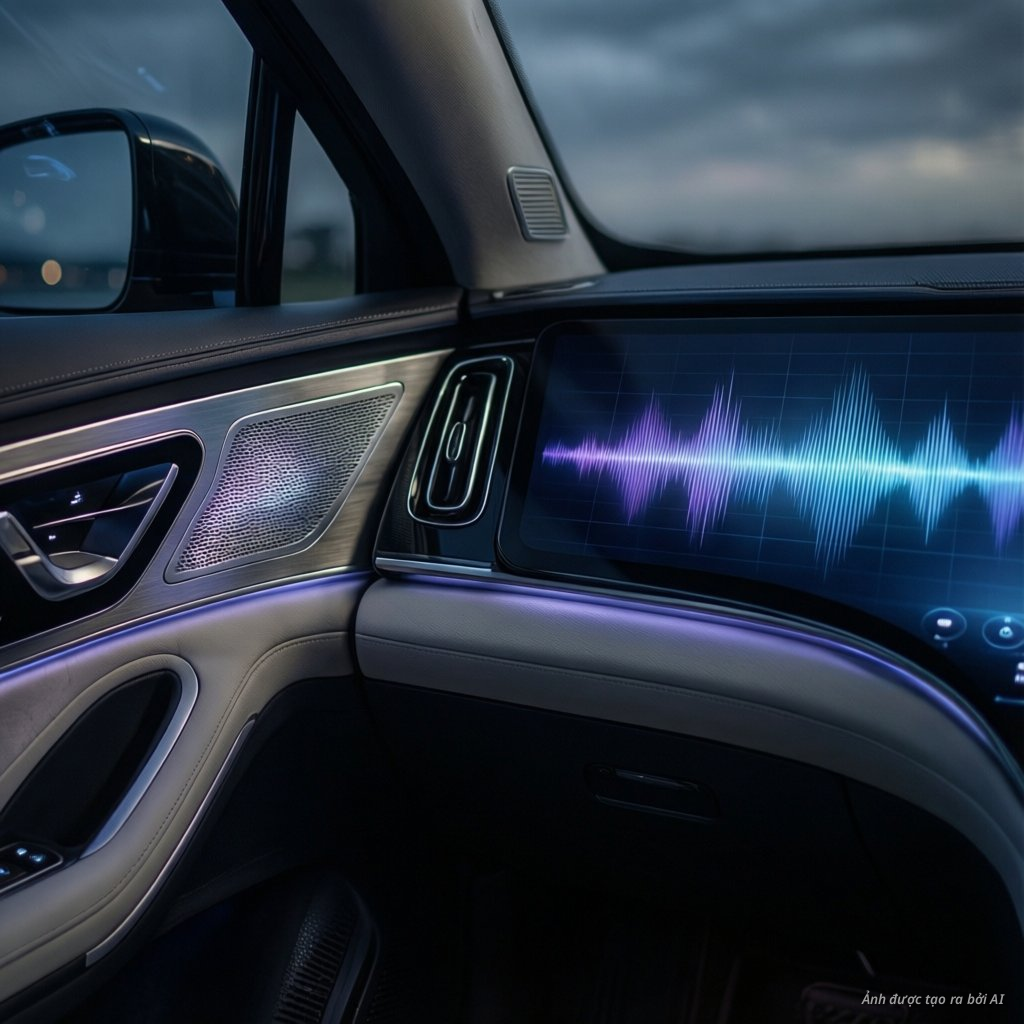
Modern vehicles are evolving into sophisticated “third living spaces.” For music lovers and tech enthusiasts, the cabin is no longer just a place for transport. It is becoming a high-fidelity concert hall on wheels.
The shift toward software-defined vehicles is driving this transformation. Manufacturers are moving away from simple hardware setups to intelligent, adaptable audio platforms. This change allows for deeper customization and superior sound quality for every passenger.
The shift to software-defined audio
Automotive audio is undergoing a massive architectural shift. Systems are transitioning from static hardware to software-defined platforms [5]. This evolution enables over-the-air updates that refine sound profiles throughout the life of the vehicle.
Electric vehicles (EVs) play a crucial role in this trend. By removing the noise of an internal combustion engine, EVs create a quieter cabin floor. This allows for a higher dynamic range and reveals subtle details in music that were previously masked by road vibration.
Immersive spatial audio experiences
Spatial audio is the new benchmark for luxury automotive entertainment. Technologies like Dolby Atmos allow sound engineers to place audio objects in a 3D space [2]. This creates a multidimensional soundstage that wraps around the listener.
Luxury brands are leading this charge. Vehicles from Mercedes-Benz, Lucid, and Volvo now feature native spatial audio integration. This technology ensures that every seat in the car feels like the “sweet spot” in a recording studio.
Digital signal processing and acoustic calibration
Car interiors are notoriously difficult environments for sound. Glass surfaces and asymmetrical seating positions often cause unwanted reflections and resonance. Advanced digital signal processing (DSP) solves these challenges by correcting impulse responses [1].
Companies like Dirac provide software that optimizes the cabin acoustics in real time. This ensures that the audio remains balanced and clear, regardless of the vehicle’s speed or road conditions. It turns a standard speaker setup into a precision-tuned instrument [1].
Managing noise with active technology
Road noise remains a significant barrier to high-quality audio. Active noise cancellation (ANC) is now standard in many premium vehicles to combat this issue. These systems use accelerometers to detect vibrations before they enter the cabin [5].
By generating anti-phase sound waves, these systems cancel out low-frequency road noise in real time. This process reduces driver fatigue and creates a cleaner canvas for the audio system to perform. Leading providers like Bose have mastered this integration for a seamless experience [3].
Personalized and multi-zone sound
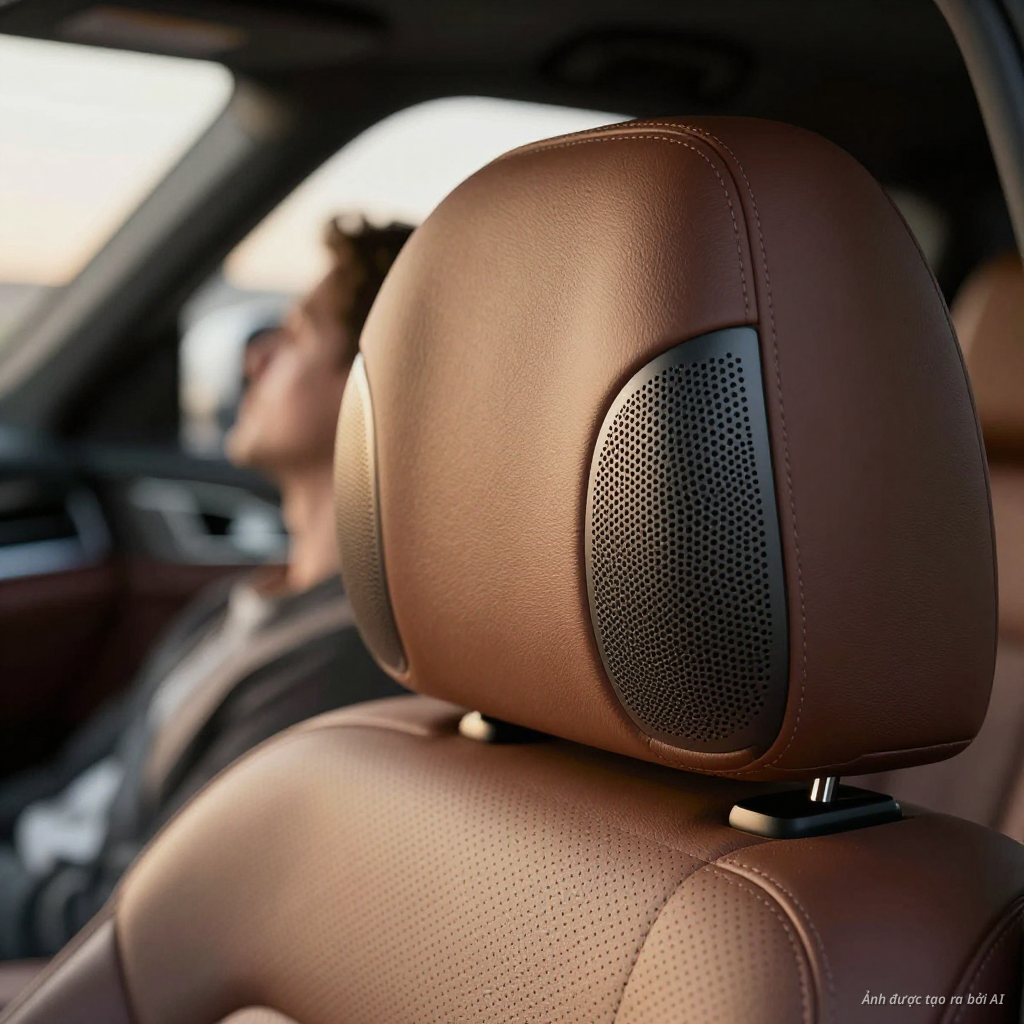
The future of in-car audio is personal. New architectures allow for multi-zone sound, where each passenger can enjoy their own media. Micro-speakers integrated into headrests enable this level of customization [3].
Drivers can listen to navigation cues while passengers enjoy music or movies. This prevents sound bleed and keeps the cabin environment peaceful for everyone. It is a major step forward for automotive personalization in the modern era.
The role of premium audio brands
The partnership between automotive OEMs and high-end audio brands is stronger than ever. Brands like Burmester provide ultra-luxury experiences for manufacturers like Porsche and Mercedes-Benz [4]. These systems often feature dozens of speakers and thousands of watts of power.
Harman International, a subsidiary of Samsung, continues to dominate the market with a diverse portfolio. They manage licenses for JBL, Harman Kardon, and Bang & Olufsen, ensuring high-quality sound across all vehicle segments [5]. Their integrated solutions are setting the standard for global automotive connectivity.
Future trends in automotive entertainment
As we move toward autonomous driving, the demand for entertainment will grow. Screens and high-fidelity audio will become the primary focus of the interior design. We can expect even deeper integration with smart home ecosystems and streaming services.
The focus will remain on creating a personalized sanctuary. Whether it is through AI-driven acoustic optimization or immersive spatial audio, the goal is clear. The car will continue to be the most exciting place to listen to music.
More information
- Digital signal processing (DSP): A mathematical technique used to manipulate audio signals. In cars, it corrects for cabin acoustics to ensure balanced, high-quality sound for every passenger regardless of seating position.
- Dolby Atmos: An object-based spatial audio technology that allows sound to be placed in 3D space. It creates an immersive, multidimensional sound environment that goes beyond traditional stereo or surround sound.
- Active noise cancellation (ANC): A technology that uses microphones and speakers to generate anti-phase sound waves. This process cancels out ambient road and engine noise, creating a quieter environment for listeners.
- Acoustic calibration: The process of tuning an audio system to match the specific interior dimensions and materials of a vehicle. This ensures optimal frequency response and sound staging throughout the cabin.
- Software-defined audio: An architectural approach where audio performance is managed by software rather than fixed hardware. It allows for performance improvements and feature updates via over-the-air (OTA) technology.