
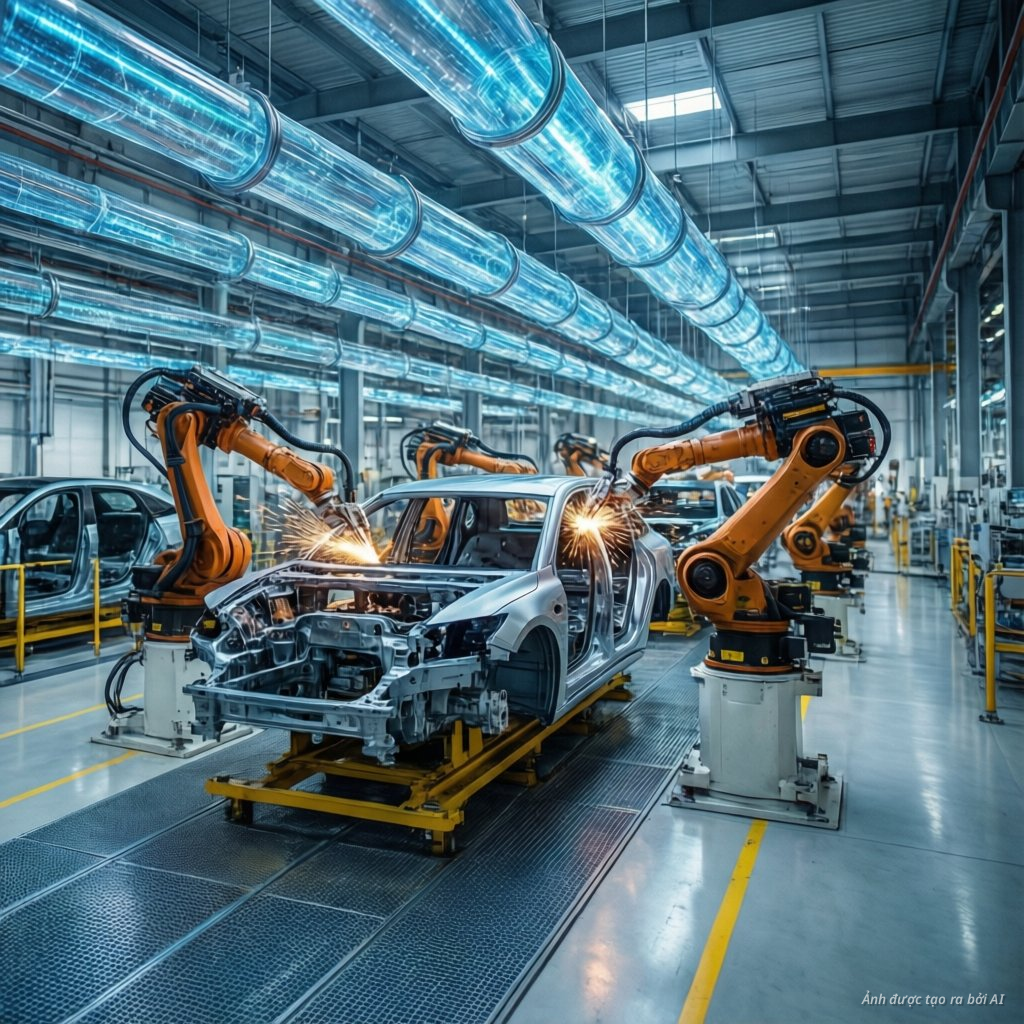
The global transition toward electric vehicles (EVs) is a cornerstone of modern sustainability efforts. While these vehicles eliminate tailpipe emissions, their production remains resource-intensive. Manufacturing battery cells, refining raw materials, and stamping vehicle bodies generate significant industrial waste. Production managers and environmental engineers now face the challenge of reconciling rapid scaling with strict ecological standards.
Current data indicates that battery cell production scrap rates can reach 15% during standard operations, and even higher during initial plant ramp-up phases [1]. Addressing these inefficiencies requires a shift toward circular economy principles and advanced process monitoring. By integrating sustainable manufacturing practices, companies can reduce their environmental footprint while improving profitability.
Identifying primary waste streams in EV production
Understanding where waste originates is the first step toward mitigation. Battery cell fabrication is often the most significant source of hazardous waste. Processes like electrode coating frequently rely on toxic solvents such as N-Methyl-2-pyrrolidone (NMP), which require complex recovery systems [2]. Beyond chemicals, the mechanical cutting and slitting of electrode sheets create substantial metallic and chemical sludge.
Vehicle assembly also contributes to the waste profile. Stamping aluminum and high-strength steel for chassis construction creates large volumes of metal scrap. If left unmanaged, this material represents a massive loss of embodied energy and resources. Furthermore, the increasing complexity of vehicle electronics introduces specialized e-waste challenges during the assembly phase.
Advanced manufacturing innovations for waste prevention
Engineers are adopting new technologies to stop waste at the source. One promising innovation is dry powder electrode coating. This process eliminates the need for hazardous solvents and energy-intensive drying ovens [4]. By removing these steps, manufacturers can reduce floor space requirements and significantly lower the generation of chemical effluent.
Digital transformation plays a critical role in quality control. The use of digital twins and AI-driven optical inspection allows for real-time defect detection during cell formation. By identifying microscopic flaws early, production lines can prevent the waste of entire battery packs. This circular approach to production ensures that materials are utilized to their maximum potential.
Closed-loop scrap recycling strategies
Closing the loop on metal and battery materials is essential for long-term sustainability. Many leading automakers now implement on-site sorting systems at stamping presses. This allows for the immediate segregation of high-grade aluminum and steel, which can be remelted and reused directly in the vehicle structure [3]. Such systems minimize the need for virgin material extraction.
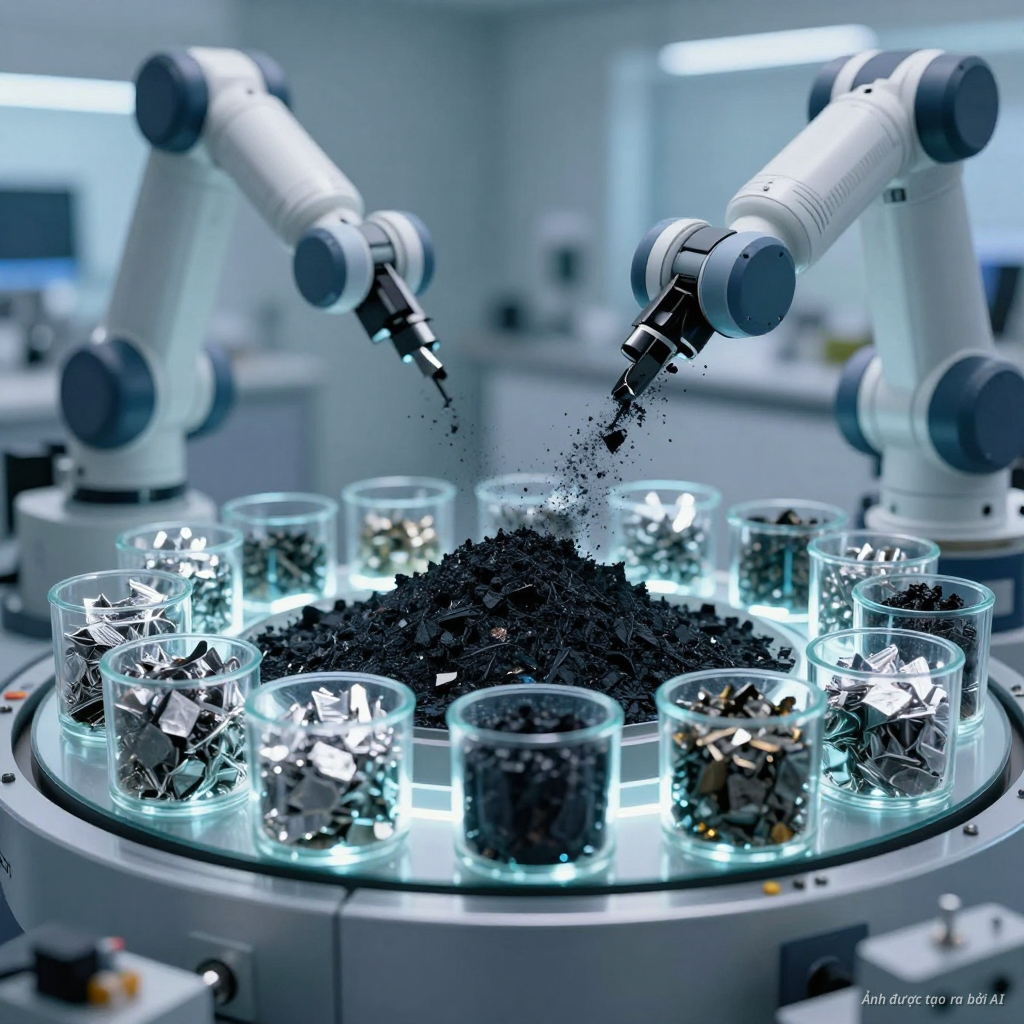
Battery scrap recovery is equally vital. Hydrometallurgical processing has emerged as the global standard for recovering lithium, nickel, and cobalt. This method offers higher recovery rates—often exceeding 95%—compared to traditional pyrometallurgy [4]. By processing battery scrap into “black mass,” manufacturers can reintroduce these critical minerals back into the cathode manufacturing supply chain.
Policy drivers and regulatory compliance
Global regulations are accelerating the adoption of these waste-reduction strategies. The European Union has introduced strict mandates through the EU Battery Regulation, which requires minimum levels of recycled content in new batteries [1]. These policies also enforce digital traceability via the battery passport system.
In North America, the Inflation Reduction Act (IRA) incentivizes domestic material sourcing and recycling [4]. These frameworks force original equipment manufacturers (OEMs) to take responsibility for the entire lifecycle of their products. For production managers, this means that waste management is no longer just an environmental concern; it is a core business requirement for market access.
Second-life applications for battery modules
Not all waste must be recycled immediately. Battery modules that fail to meet automotive performance standards often retain 70% to 80% of their original capacity [3]. Instead of being discarded, these units can be repurposed for stationary energy storage systems (BESS). These systems support grid stability and provide buffers for commercial solar installations.
Repurposing batteries extends the useful life of the minerals used in production. It delays the need for intensive recycling processes and provides a secondary revenue stream for OEMs. By integrating second-life strategies, companies can further improve their overall sustainability metrics while reducing the volume of hazardous materials entering the waste stream.
Future outlook for production efficiency
The path toward zero-waste manufacturing is complex but achievable. It requires a combination of material science, digital monitoring, and policy alignment. Production managers must prioritize investments in technologies that reduce scrap rates at the cell level. Simultaneously, environmental engineers should focus on building robust, closed-loop systems for both metal and chemical waste.
As the industry scales, the ability to minimize waste will become a key competitive advantage. Companies that master these processes will benefit from lower raw material costs and increased regulatory resilience. The transition to a circular EV manufacturing model is not merely a trend; it is the necessary evolution of the automotive sector.
More Information
- Black mass: A dark powder resulting from the mechanical shredding of battery cells, containing high concentrations of valuable metals like lithium, nickel, cobalt, and manganese for recovery.
- Hydrometallurgy: A chemical extraction process that uses aqueous solutions to recover high-purity metals from battery scrap at lower temperatures than traditional smelting methods.
- Dry electrode manufacturing: An innovative production technique that eliminates the use of liquid solvents during electrode coating, reducing energy consumption and hazardous chemical waste.
- Direct recycling: A recycling approach that recovers and restores cathode materials while preserving their chemical structure, avoiding the need to break materials down into basic elements.
- Scrap-to-cathode efficiency: A performance metric measuring the percentage of factory-generated scrap material that is successfully recycled and re-entered into the production of new battery cathodes.