
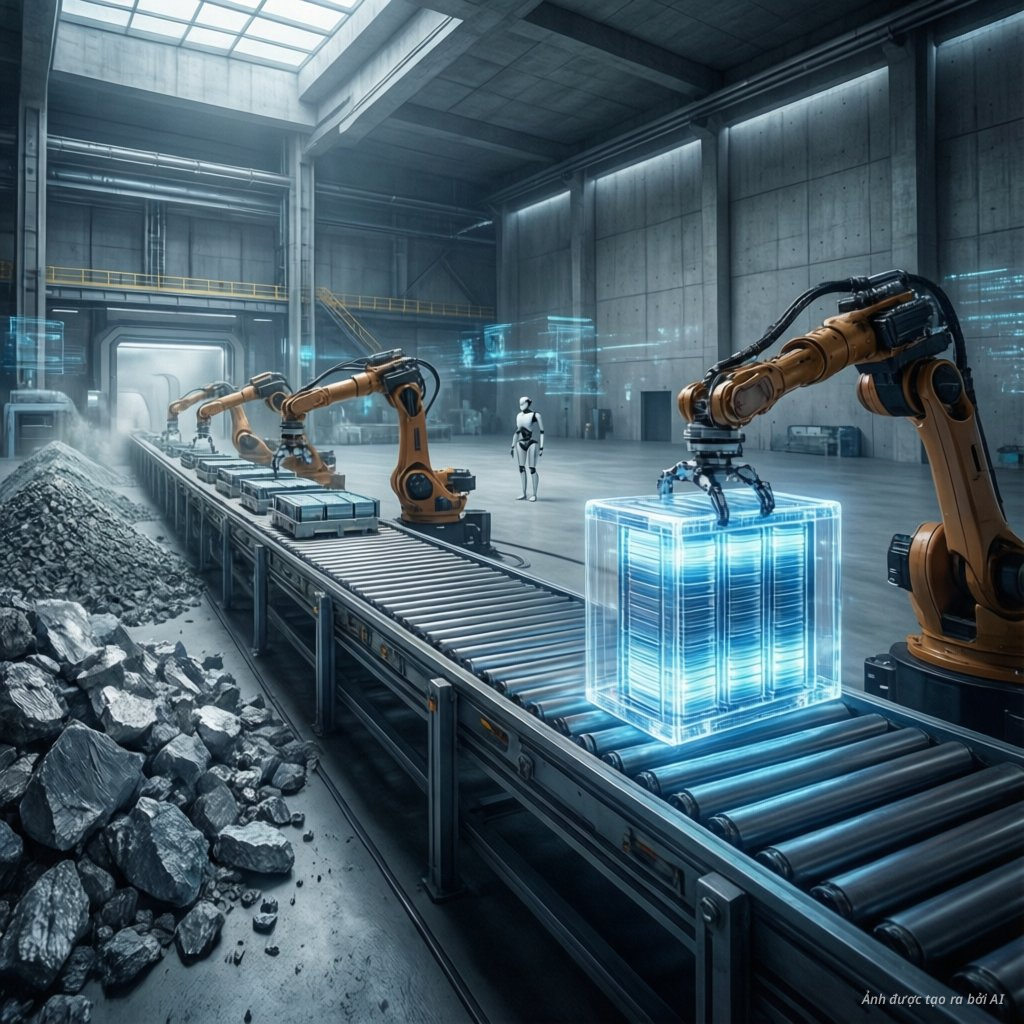
The global transition to electric mobility relies heavily on the stability and sustainability of the battery supply chain. Moving from a linear “take-make-dispose” model to a circular ecosystem is no longer optional for industry leaders. This shift is essential to secure critical mineral supplies and reduce environmental impacts [1].
Supply chain managers must now navigate complex geopolitical landscapes and evolving regulatory frameworks. By integrating recycling and repurposing into the lifecycle, companies can mitigate risks and enhance resource efficiency. This article explores how a circular battery value chain transforms the industry from the ground up [4].

Upstream: mining and extraction challenges
The upstream segment involves the extraction of critical minerals like lithium, cobalt, nickel, and manganese. These materials are geographically concentrated, creating significant supply chain vulnerabilities. For instance, cobalt production remains heavily reliant on the Democratic Republic of the Congo [1].
Extraction processes often face intense scrutiny regarding water usage and human rights. Analysts must prioritize ethical sourcing to comply with global ESG standards. Furthermore, the high carbon intensity of smelting nickel presents a major hurdle for manufacturers aiming for net-zero goals.
Midstream: refining and chemical processing
Midstream operations convert raw minerals into battery-grade chemicals. Currently, China dominates the refining of lithium, cobalt, and graphite, processing over 60% of global supply [1]. This concentration creates a bottleneck that Western markets are working to alleviate through localized refining hubs.
Supply chain managers are exploring recycling critical metals from next-generation ev batteries and the path forward to diversify inputs. Reducing reliance on single-source regions is a top priority for procurement teams. Stable access to refined chemicals is the backbone of consistent cell manufacturing.
Downstream: cell and pack manufacturing
Downstream, active materials are assembled into battery cells and packs. The industry is witnessing a rapid expansion of “gigafactories” across North America and Europe. This shift is largely driven by policy mandates designed to shorten supply chains and improve resilience [3].
Manufacturers are increasingly focusing on sustainable electric vehicle design through lightweight materials and disassembly. Efficient design allows for easier battery removal and recycling at the end of the vehicle’s life. This design-for-recycling approach is crucial for long-term supply chain viability.
Use phase and second-life repurposing
Batteries typically serve their first life in an electric vehicle for 8 to 15 years. Once capacity drops below 80%, they are often unsuitable for mobility but remain valuable for other uses. Repurposing these units for stationary energy storage systems helps stabilize power grids [3].
By extending the useful life of a battery, companies maximize the return on their initial material investment. This stage acts as a bridge, delaying the need for immediate recycling. It also creates new revenue streams for stakeholders involved in battery research and development [5].
Closing the loop: recycling technologies
End-of-life recycling is the final piece of the circular puzzle. Spent batteries are shredded into “black mass,” a mixture rich in valuable metals. Several technologies exist to recover these materials, each with distinct trade-offs [3].
- Pyrometallurgy: this method uses high-temperature smelting. It is effective for processing entire modules, though it often loses lithium in the slag.
- Hydrometallurgy: this process uses chemical leaching to recover high-purity metals. It offers higher recovery rates than pyrometallurgy but requires complex waste management [5].
- Direct recycling: this emerging technology reconditions cathode materials directly. It holds the potential for the lowest energy footprint in the industry.
Regulatory drivers and policy impact
Government policies are accelerating the transition to circularity. The European Union has introduced the EU battery regulation, which mandates recycled content thresholds [2]. This regulation also introduces a digital battery passport to track material origin and carbon footprint.
In the United States, the Inflation Reduction Act (IRA) provides incentives for domestic mineral sourcing. By treating recycled materials as domestic origin, the IRA encourages the growth of local recycling infrastructure. These policies force supply chain managers to prioritize transparency and traceability [2].
Strategic outlook for supply chain analysts
For analysts, the future lies in data-driven supply chain management. Tracking battery health and material composition through digital passports will become standard practice. Companies that master the logistics of reverse supply chains will gain a competitive advantage.
Investment in recycling capacity must scale in tandem with EV adoption rates. Collaboration between mining, manufacturing, and recycling sectors is vital. By treating every battery as a future resource, the industry can ensure a sustainable supply of materials for the next generation of vehicles [4].
More information
- Black mass: The concentrated powder residue obtained after shredding and sorting end-of-life batteries, containing valuable metals like lithium, nickel, cobalt, and manganese that are recovered through recycling processes.
- Battery passport: A digital record that tracks the lifecycle of a battery, including its carbon footprint, material origin, chemical composition, and recycled content, as mandated by emerging regulations.
- Closed-loop supply chain: A strategic model where products are designed for disassembly, and materials from end-of-life items are recovered and reintroduced into the manufacturing process to minimize waste.
- Urban mining: The process of reclaiming raw materials, such as lithium and cobalt, from discarded electronic products and electric vehicle batteries rather than relying solely on traditional geological extraction.
- Hydrometallurgy: A recycling technique that uses aqueous chemical solutions to dissolve battery materials, allowing for the separation and recovery of high-purity metals with high efficiency.