
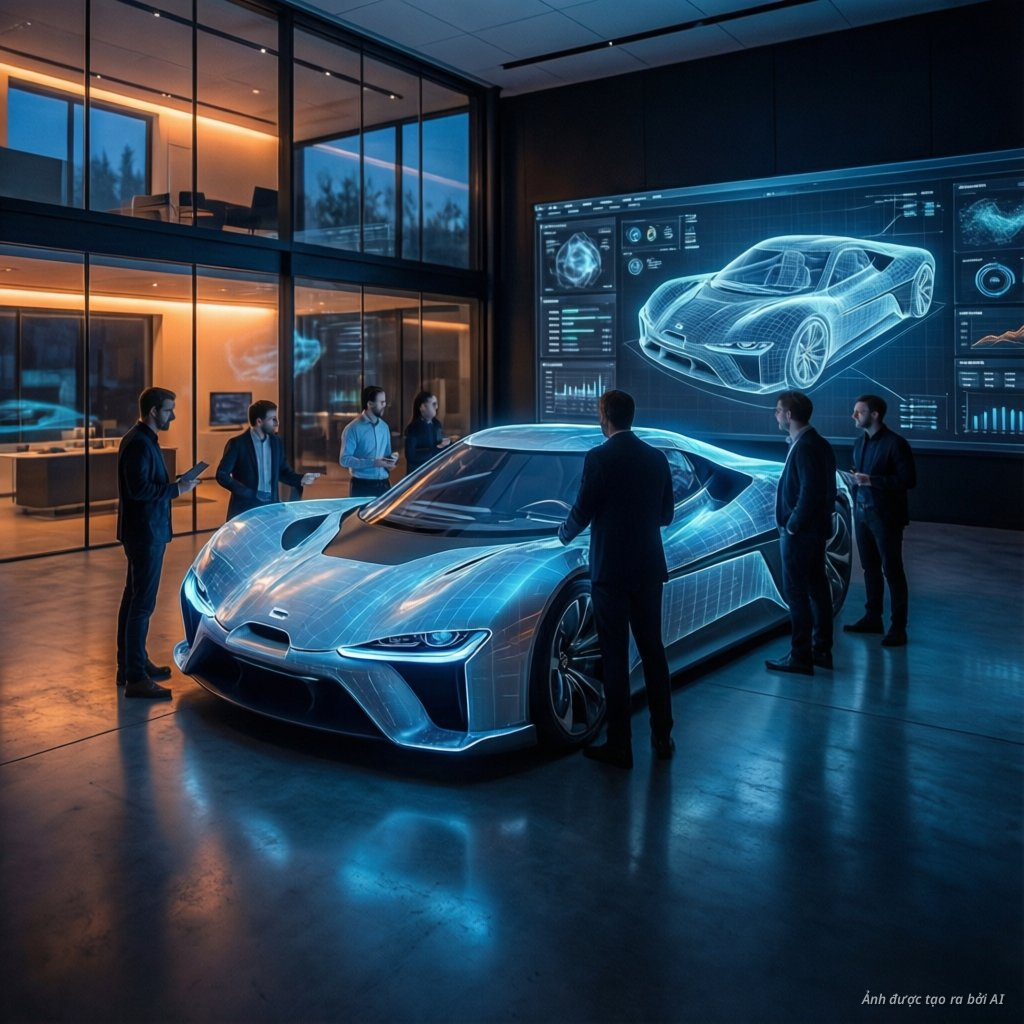
The automotive industry stands at a critical turning point. For decades, the design process relied on a linear workflow. Creative designers sketched concepts, while engineers later validated them for physics and safety. Today, generative AI is dismantling these silos to accelerate innovation.
Generative AI tools now allow teams to merge artistic vision with technical constraints instantly. This transformation is not merely about aesthetics. It is about creating vehicles that are lighter, more aerodynamic, and highly efficient [3].
The shift toward physics-aware design
Traditional generative design often produced beautiful shapes that failed real-world tests. Early models prioritized visual appeal over functional requirements like drag coefficients or structural integrity. Modern frameworks now integrate engineering physics directly into the generation process [1].
Designers can now prompt the AI with specific performance targets. For instance, they might request a sleek SUV profile while mandating a specific drag coefficient ($C_d$). The Toyota Research Institute has pioneered techniques that ensure these parameters remain consistent throughout the design evolution [2].
Enhancing electric vehicle efficiency
Aerodynamics are paramount for electric vehicle (EV) range. Every minor reduction in drag translates to increased battery efficiency. Generative AI allows engineers to iterate on body shapes at a granular level. It optimizes curves and air intakes to minimize turbulence far faster than manual simulation [3].
By using generative AI models, companies can test thousands of aerodynamic variations in hours. This rapid prototyping ensures that the final vehicle meets range targets without compromising the brand’s visual identity. It is a fundamental shift in how we approach user-centric automotive interior design: the future of mobility.
Structural lightweighting and topology optimization
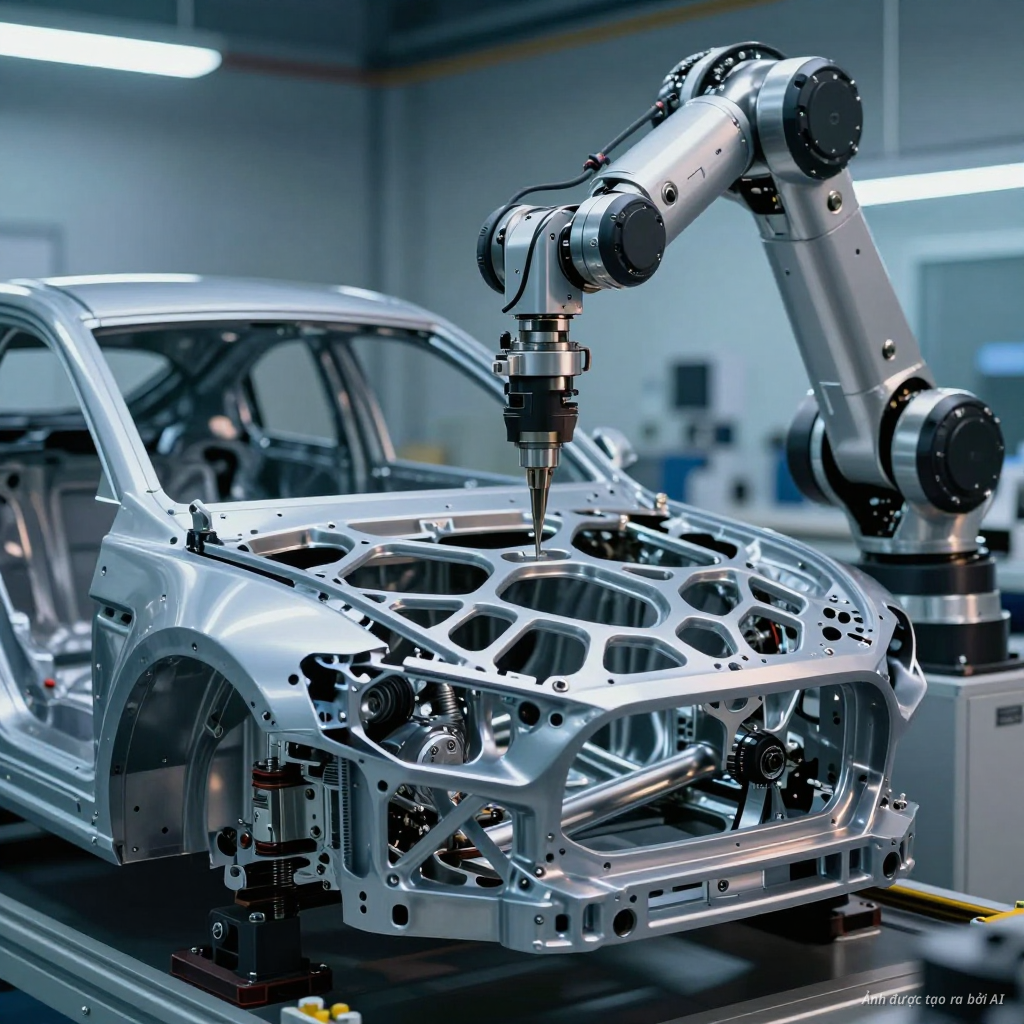
Weight reduction is another core benefit of generative algorithms. By analyzing stress points and load paths, AI can suggest organic, lattice-like structures for components. These parts are often significantly lighter than traditional solid-cast alternatives [2].
These optimized designs are frequently intended for additive manufacturing or advanced casting methods. Manufacturers can achieve a 20% to 40% reduction in component weight while maintaining safety standards. This process effectively turns complex engineering challenges into automated design solutions [3].
Accelerating the time-to-market
The traditional design-to-production cycle can take years. Generative AI drastically shrinks the early-stage ideation phase. Teams can generate hundreds of viable 2D concepts and 3D mesh models from simple text inputs [1].
This speed allows designers to explore unconventional ideas that might have been dismissed due to time constraints. When combined with platforms like NVIDIA Omniverse, these models move seamlessly into digital twin environments. This integration helps teams visualize the vehicle in various conditions before a single physical prototype exists [3].
Personalization and ergonomic interiors
Generative AI is not limited to the exterior. It plays a vital role in designing adaptive cabin spaces. AI can analyze ergonomic data to suggest seat geometries that maximize comfort for a diverse range of body types [2].
Furthermore, it helps designers map out smart ambient lighting and sustainable material textures. These interiors can be customized to match specific user preferences while adhering to strict safety and space constraints. It represents the next frontier in how AI virtual assistants are revolutionizing automotive interaction.
Overcoming implementation challenges
While the benefits are clear, integration requires a cultural shift. Designers and engineers must learn to collaborate with AI as a co-creator rather than a replacement. The quality of the output depends heavily on the quality of the prompt and the constraints provided [1].
Companies must also invest in robust data pipelines to train these models effectively. Ensuring that the AI respects proprietary design language is essential for brand consistency. As the technology matures, it will likely become a standard tool in every major automotive studio worldwide [3].
The future of the automotive workforce
The role of the automotive designer is evolving. Instead of spending weeks on manual drafting, they will focus on curating AI-generated options. They will act as directors, guiding the AI toward the desired aesthetic and functional outcomes.
Engineers will shift their focus toward defining the constraints and validating the AI’s suggestions. This collaborative model will produce safer, more efficient, and more beautiful vehicles. The future of automotive design is collaborative, intelligent, and faster than ever before [2].
More Information
- Generative topology optimization: A mathematical method that optimizes material layout within a given design space, for a given set of loads, boundary conditions, and constraints, to maximize structural performance.
- Drag coefficient ($C_d$): A dimensionless quantity that describes the effect of air resistance on an object; lower values are critical for improving the range and energy efficiency of electric vehicles.
- Physics-aware prompting: A technique in generative AI where textual inputs are constrained by real-world physical laws, ensuring that AI-generated designs are functional and buildable from the start.
- Text-to-3D synthesis: The process of using AI algorithms to convert descriptive text prompts into complex, textured 3D CAD models suitable for engineering simulation and visualization software.
- Digital twins: A virtual representation of a physical vehicle or component that serves as its real-time digital counterpart, allowing for testing and optimization in simulated environments.