
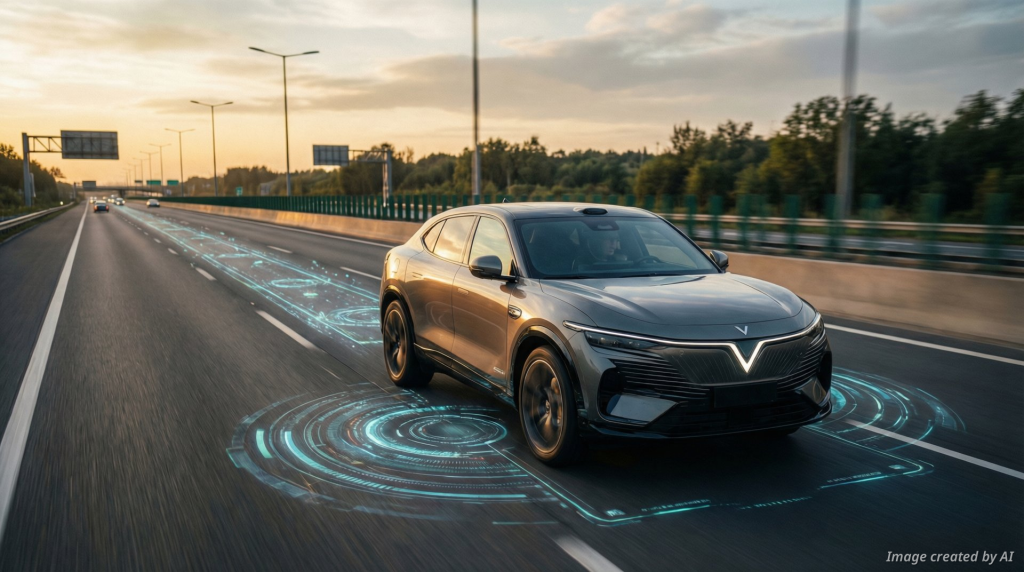
The automotive industry is undergoing a massive transformation. Modern vehicles are no longer just mechanical machines. They are becoming intelligent platforms integrated with advanced software. The VinFast VF7 represents this shift toward smarter, safer, and more connected transportation.
At the heart of the VF7 experience is a sophisticated suite of technology. This system aims to reduce driver fatigue and prevent potential accidents. By leveraging sensors, cameras, and artificial intelligence, the vehicle provides a safer environment for everyone on the road [1].
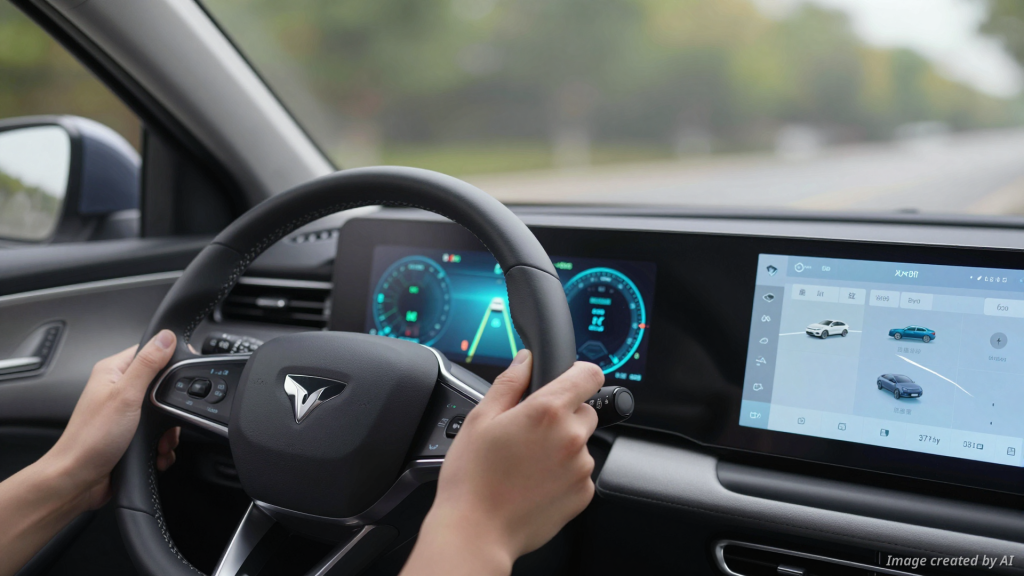
The core of ADAS technology
Advanced Driver Assistance Systems, or ADAS, serve as the foundation for modern vehicle safety. These systems act as a secondary set of eyes for the driver. They process data in real time to make split-second decisions [2].
The VF7 integrates various sensors to monitor the vehicle’s surroundings. These include radar, ultrasonic sensors, and high-definition cameras. Together, they create a 360-degree awareness of the driving environment.
Key safety features in the VF7
Safety is a primary concern for modern car buyers. The VF7 addresses this with a comprehensive set of active safety features. These tools are designed to assist the driver during complex maneuvers [3].
- Adaptive cruise control: this maintains a safe distance from the vehicle ahead.
- Lane keeping assist: it gently steers the car to stay within lane markings.
- Automatic emergency braking: the system detects obstacles and applies brakes if necessary.
- Blind spot monitoring: it alerts drivers to vehicles hidden from their direct view.
Moving toward autonomous driving
While the VF7 currently focuses on driver assistance, it is built with the future in mind. The architecture supports iterative software updates. This allows the vehicle to improve its capabilities over time [4].
Autonomous driving is a spectrum ranging from basic assistance to full self-driving. The VF7 operates within the levels that emphasize driver engagement. The goal is to provide convenience without replacing the driver’s judgment.
How sensors and AI work together
The magic of the VF7 lies in its sensor fusion technology. The vehicle collects massive amounts of data from its environment. Artificial intelligence then interprets this data to identify road signs, pedestrians, and other vehicles [5].
This process happens in milliseconds. It ensures that the vehicle responds accurately to changing traffic conditions. For those interested in how these systems compare across the brand’s lineup, you can read more about understanding the VF9 advanced driver assistance systems and autonomous driving capabilities.
The benefits of connected vehicles
Connectivity is essential for modern ADAS performance. The VF7 uses cloud-based data to stay updated on traffic patterns and road conditions. This connectivity enhances the accuracy of navigation and safety alerts.
Drivers benefit from a smoother, less stressful experience. By offloading repetitive tasks to the car, the driver remains more alert for critical situations. This is a significant step forward in automotive design.
Future-proofing your driving experience
Technology in the automotive sector moves fast. Buying a vehicle like the VF7 means investing in a platform that evolves. Over-the-air updates ensure that the software remains current with the latest safety standards.
This approach protects the long-term value of the vehicle. It also ensures that the driver always has access to the most refined safety algorithms. To see how these manufacturing standards are upheld, explore the future of automotive manufacturing: VinFast’s automated processes in Southeast Asia.
Safety and responsibility
Despite the advancement of ADAS, the driver remains responsible for the vehicle. These systems are designed to assist, not replace, human attention. Drivers should always remain vigilant while behind the wheel.
The VF7 provides the tools for a safer journey. However, the human element remains the most important safety feature. Using these systems correctly leads to a better driving experience for everyone.
More Information
- ADAS: A collection of electronic systems that assist drivers in the driving and parking process to increase vehicle safety and improve the overall driving experience through automation.
- Sensor fusion: The process of combining sensory data from disparate sources such as cameras, radar, and lidar to provide a more accurate and robust perception of the vehicle’s environment.
- Adaptive cruise control: An intelligent form of cruise control that automatically adjusts the vehicle’s speed to maintain a safe distance from vehicles ahead in the same lane.
- Over-the-air (OTA) updates: A method of distributing new software, firmware, or other data to devices like vehicles wirelessly, allowing for feature improvements without visiting a service center.
- Autonomous driving: The capability of a vehicle to sense its environment and operate without human involvement, often classified into levels ranging from zero to five.